 PT
PT EN
EN
How do they work?
Multifocal contacts combine powers for near, intermediate and distance vision. Simultaneous-vision designs present information from different distances; the visual system adapts to use relevant information. Design and centration affect the result.
The pupil controls incoming light
The pupil is the opening in the centre of the iris. It usually becomes smaller in brighter light and larger in dim light. It also tends to constrict when looking at a near object, as part of the focusing response. The contact lens does not contract: the pupil changes size.
How does this affect the lens zones?
Pupil size influences the proportion of light passing through different areas of a multifocal lens. A smaller pupil gives more weight to the central region; a larger pupil allows more outer regions to contribute. Lens centration and design also matter. There is no automatic, exclusive switch from one zone to another.
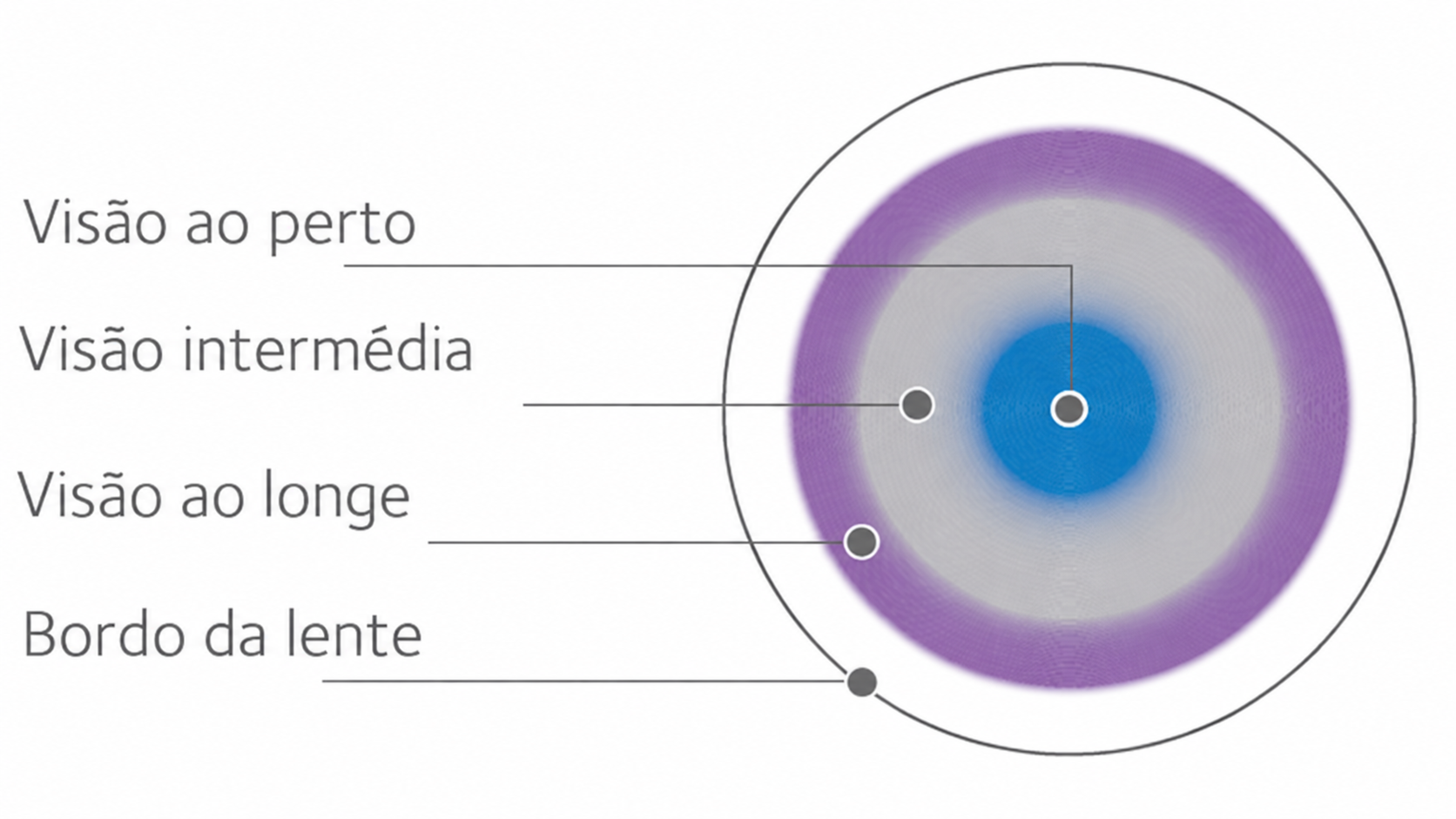
In this diagram, the centre supports near vision
This design has near power in the centre, an intermediate transition and distance power further out. When the pupil constricts, the central region tends to have more influence on incoming light. This may favour the near-power contribution in this design, but does not automatically exclude other powers. Vision also depends on centration, lighting and visual processing with both eyes.
Who are they for?
They are an option for presbyopia, the age-related difficulty focusing up close. They may reduce dependence on reading glasses but require individual fitting and an eye health assessment.
Do I need to look down to read?
Unlike progressive spectacles, simultaneous-vision contacts do not require searching for a lower reading zone. Look naturally at the object.
Adaptation and follow-up
Vision may feel different initially. There is no universal deadline or guaranteed outcome. Follow the prescribed wearing schedule and follow-up. Do not extend wearing time or change the prescription yourself.
Reading and phone tips
Use good lighting, avoid reflections and enlarge text if helpful. Keep a comfortable distance. Bring examples of difficult tasks to your appointment.
Observe everyday tasks
Check vision with both eyes open in usual conditions. Note distance, lighting and wearing time when difficulties occur. This helps your practitioner adjust the solution.
Driving
Drive only when vision is clear enough to be safe. If halos, glare or night-time difficulties occur, avoid driving in those conditions and arrange an assessment. Carry suitable prescription glasses.
Will I still need glasses?
You may need glasses for some tasks. Fitting balances vision at several distances. Explain your priorities: the same solution does not suit everyone.
Essential care
Wash and dry hands before handling lenses. Remove them before sleeping, showering or swimming. Never use water or saliva to clean or store lenses. Follow wearing and replacement schedules.
Daily and reusable lenses
Discard daily disposable lenses after removal. For reusable lenses, follow cleaning and disinfection instructions, use fresh suitable solution and never top up old solution. Care for the case as instructed.
When to remove lenses
Pain, redness, light sensitivity, discharge or sudden reduced vision should not be dismissed as adaptation. Remove lenses, do not reinsert them and seek prompt eye care. Severe pain or sudden vision loss requires urgent attention.
Support at Meuoptico
Ask the team in Picoas or Duque de Loulé about contact lens fitting. Bring glasses and current lens packaging or prescription details. Tell us about your daily visual tasks and difficulties.
Information and sources
General information consulted on 9 October 2026. It does not replace individual assessment or your lens instructions. Sources: CooperVision, CDC and FDA.
CooperVision · CDC · FDA
Have questions? We are here.
Talk to our team in Duque de Loulé or Picoas.