 PT
 EN

Near. Far. Life in between.
If your vision has changed — up close, at a distance or at your computer — we help you understand what you need and choose with confidence.
 Personalised advice · Duque de Loulé and Picoas
What are progressive glasses and how do they work?
Progressive lenses combine distance, intermediate and near correction in one pair of glasses. The lens power changes smoothly and gradually. Unlike bifocals, they have no visible dividing line. You look through the appropriate area for each distance.
Distance
The upper area is used for distance vision, such as driving or watching television.
Intermediate
The central area serves intermediate distances, such as a computer screen or car dashboard.
Near
The lower area is used for reading, checking your phone and close-up tasks.
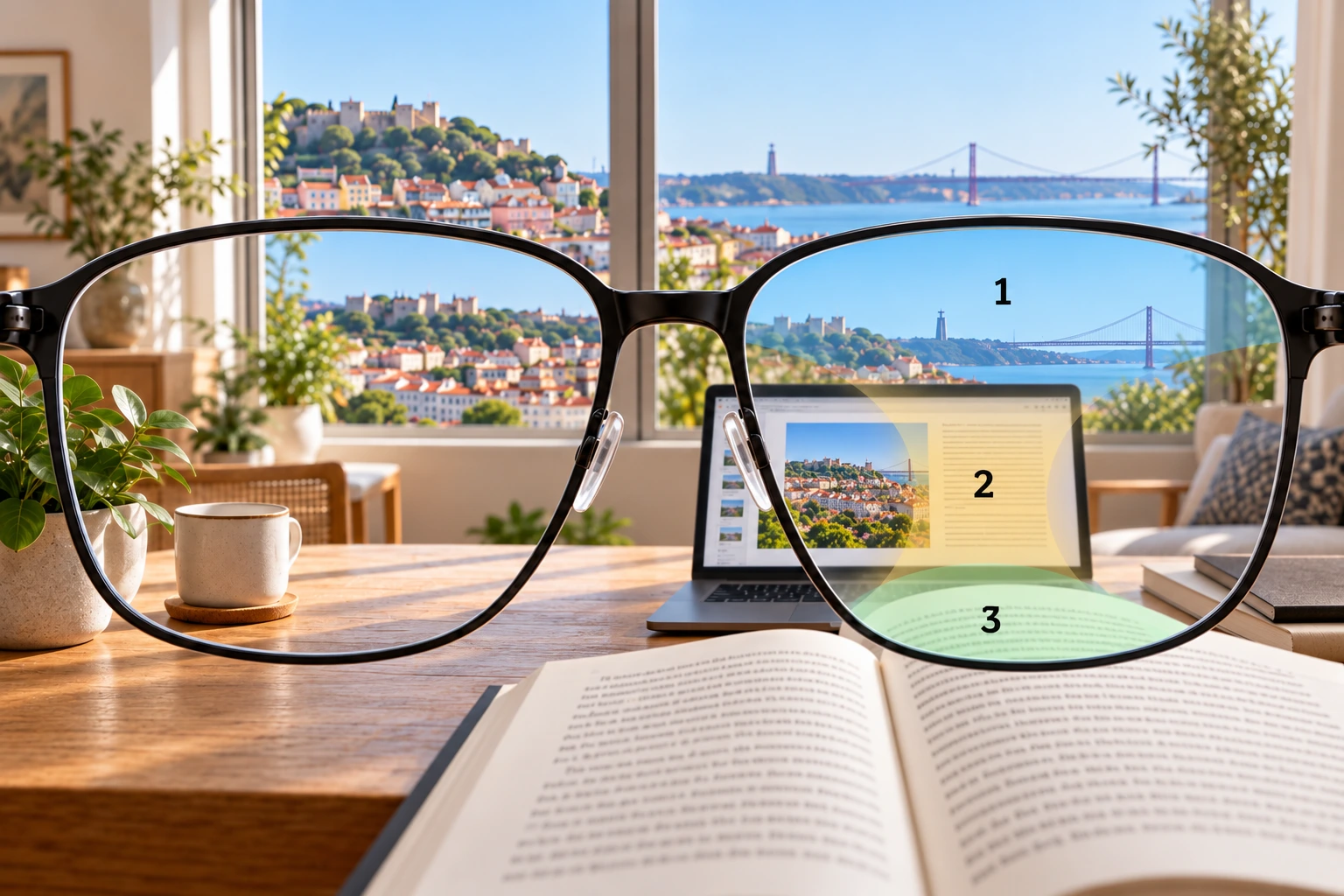
Illustrative diagram: real progressive lenses have no visible lines separating these zones.
Compare more than the price.
Choosing solely on price can overlook everyday comfort. Lens design, fields of vision and personalisation make a difference. We explain the options clearly and recommend a solution suited to your needs and budget.
Learn more about lens differences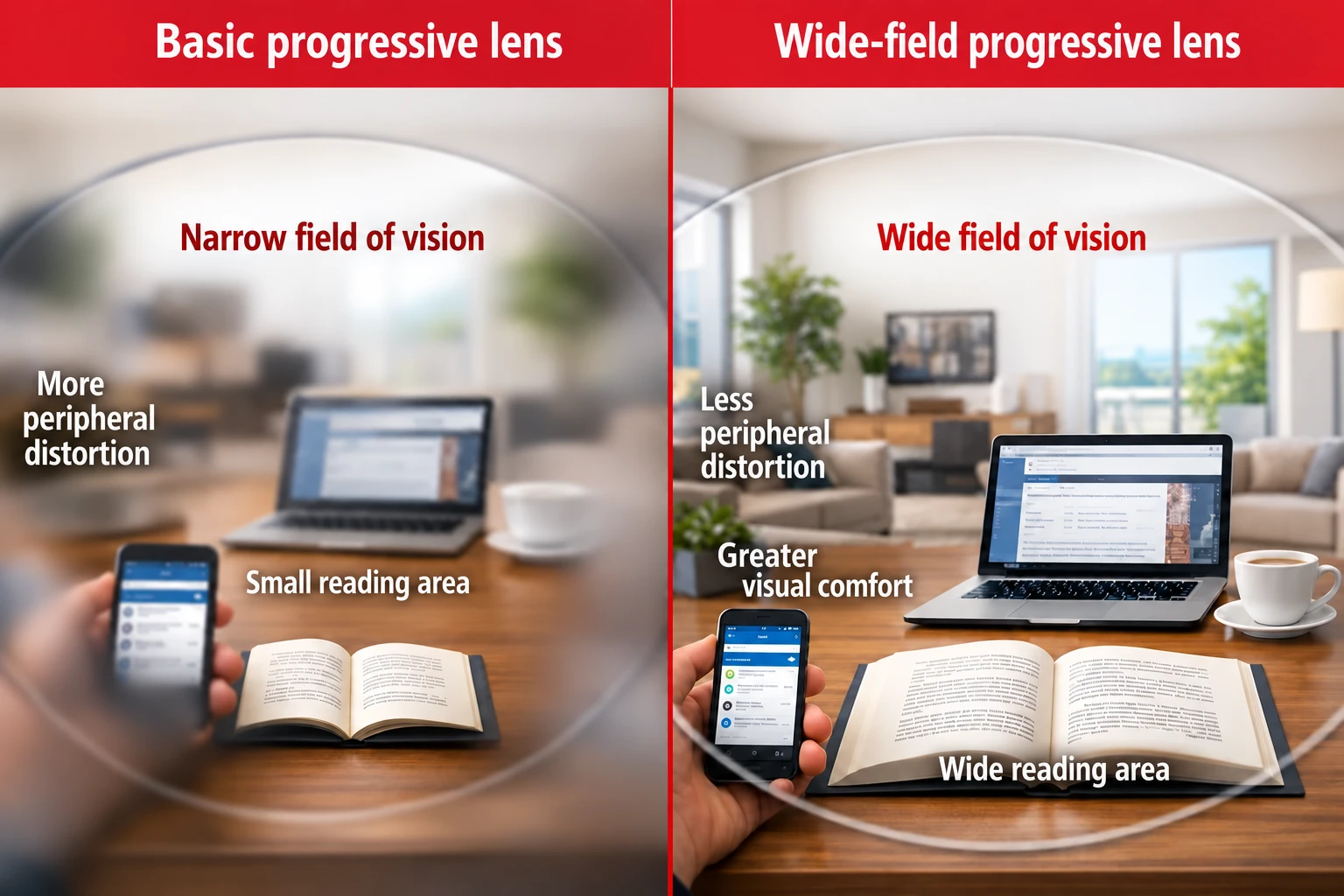
Technology. Coatings. Personalisation.
Not all progressive lenses are the same.
Lens technology
Lens design influences the width of the useful fields of vision and transitions between distances. Different designs suit different needs.
Coating quality
Anti-reflective coatings can reduce reflections. Scratch resistance and easy-clean coatings help with care and durability.
Personalisation
Your prescription, frame, measurements and routine help us choose and fit the lenses. Follow-up support is part of the choice.
We help you see better in comfort.
We ask the right questions before choosing the lenses.
Your routine
Reading, computer use, work and leisure help us understand how you use your vision.
Lenses and frame
We explain technologies, coatings and frame choices with your needs and budget in mind.
Measurements and fitting
Accurate lens positioning and frame adjustment matter. We support you at collection and during adaptation.
You are supported as you adapt.
Adaptation varies from person to person. At first, you may notice differences when focusing, adjust your head movements and learn to use the different lens areas. We explain how to get started and can check comfort and fit. If you struggle, return to the store for advice.

A practical solution for everyday life.
If you need both near and distance correction, progressives can let you complete many everyday tasks with the same pair. Your comfort, routine and budget should guide the choice.
One pair
Areas for near, intermediate and distance vision, reducing the need to change glasses for many tasks.
Gradual transitions
The power changes progressively rather than at a marked bifocal dividing line.
No visible lines
A discreet solution combining different powers in the same lens.
Single vision or progressive?
Understand the differences and what might suit you. If you spend many hours on one task, such as computer work, we can also discuss task-specific options.
Read the comparisonClear answers. Before you choose.
How do progressive lenses work?
The power gradually changes along the lens: the top is for distance, the middle for intermediate vision and the bottom for near vision, with no visible dividing line.
Are all progressives the same?
No. Design, fields of vision and personalisation differ. Your prescription, frame, routine and budget should guide the choice.
How long does adaptation take?
It varies. We explain how to use the lens areas and follow up on comfort. If you have difficulty, return so we can check fit and use.
Can I use my current frame?
We can assess it in store. Suitability depends on its condition, size and compatibility with the lens and prescription.
How much do progressive glasses cost?
The price depends on the frame, prescription, lens technology and coatings. We explain the options and provide a suitable quotation.
What if I spend many hours at a computer?
Tell us how you work and your screen distance. We can discuss near and intermediate solutions where appropriate.